

Cold days call for warm mugs and slow sips. January is the perfect time to lean into comfort – and nothing does it better than a truly good cup of hot tea. Throughout January we want to talk more about tea. And we thought we would start with a classic – Earl Grey.
One of the world’s most popular teas, Earl Grey, starts with a good Assam black tea and that unmistakable aroma of bergamot. A bright floral citrus, more fragrance than sweetness, bergamot is from the Mediterranean whose essential oil is prized in both food and fragrance. You may not want to eat this orange, but it sure makes a darn good cup of tea.
And who is this Earl you might ask… there are tall tales galore about how this tea got its name. But here is what we know. It is well-supported that a bergamot-scented tea existed by the early 1800s. And we know Charles Grey was the 2nd Prime Minister of England and the 2nd Earl Grey. Now we can suppose, like all good Brits, he probably liked a good cup of tea. Add a bit of folklore of the conversations between the Earl and Twinings, one of the most historic English tea merchants, and you see how a tea we have enjoyed for hundreds of years may have come to be.
How to Brew a Proper Cup
Want a smoother, brighter cup? We may be partial, but we think the quality of tea is the first step to a good cup. Looseleaf is our preferred tea because you see what you are putting in your cup, you can control the amount you use, and it is usually a better quality of leaf.
Start by heating a fresh kettle of water to just below the boil, ideally 195°F for Earl Grey. If you don’t have a temperature controlled electric kettle then I recommend you boil the water, pull it off the heat, pop the lid off, and let it cool for a minute or two.
We like 3 grams of leaf for every 8 oz of water (who makes only a cup of tea?!) which is about a flat teaspoon of tea if you don’t have a scale nearby. Into a strainer, that will allow the leaves room to expand and circulate, then steep for 3 minutes.
Our most important advice… it's your cup of tea! Once you taste this cup, make it your own. You want it stronger, use more leaves for a longer steep. Like it a bit lighter, use less leaves, we wouldn't steep for less time (unless you really want too).
Popular Members of the Grey Family
What began as a simple pairing of black tea and bergamot oil has grown into a surprisingly creative flavor category. Today’s Earl Grey variations range from bright and delicate to rich and dessert-like, offering something for nearly every kind of tea drinker.
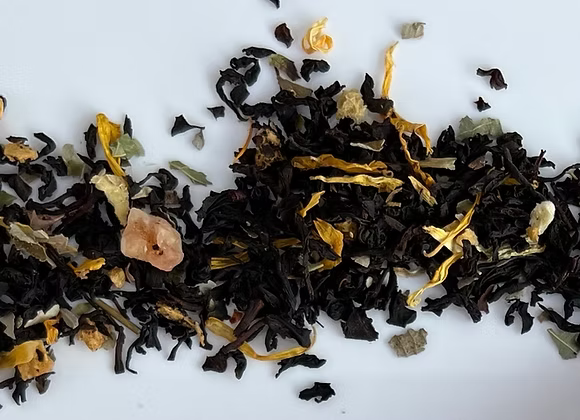
Lady Grey or sometimes called the Countess Grey is designed to be a softer, more citrus-lifted take on the earl, typically with orange and lemon peel and sometimes cornflowers.
Earl Grey Crème has vanilla cream notes added, and French Earl Grey leans on floral notes like rose or lavender. Red Earl Grey changes the base tea to rooibos for a caffeine-free choice. And Russian Earl Grey is often intensified with orange peel, lemongrass, and florals alongside bergamot.
Which one should we feature next at Doehrn Tea?
0 comments